Quick tips
- Cook or blanch the vegetables separately so each one keeps its own flavor.
- For a simple version, gochujang and a little sesame oil are enough. Bokkeum gochujang is optional.
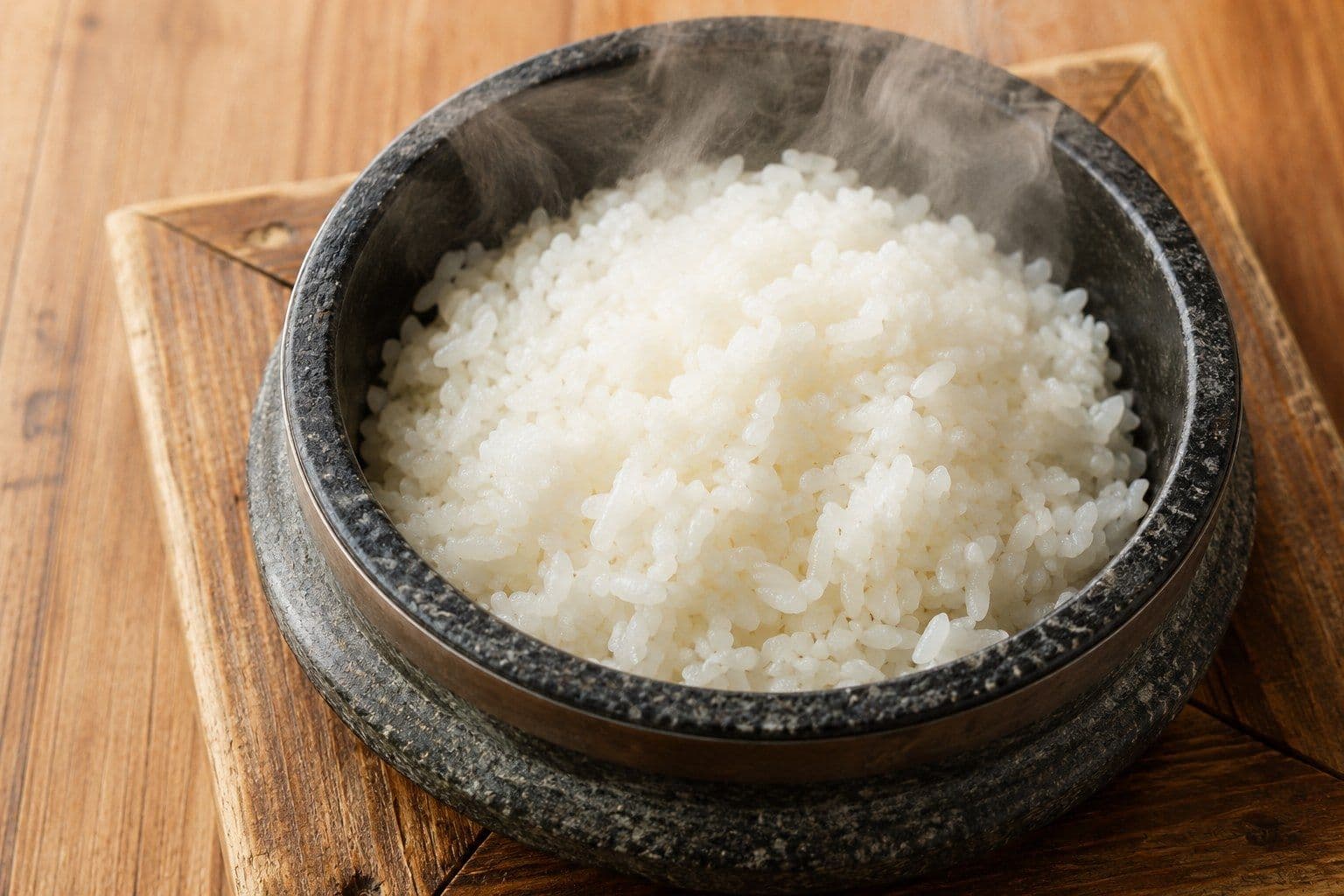
- Do not cook the rice too soft, or the bowl can become mushy.
A practical bibimbap recipe with rice, vegetables, namul, gochujang, and optional egg or beef. How to make a Korean rice bowl at home.
Korean rice bowl
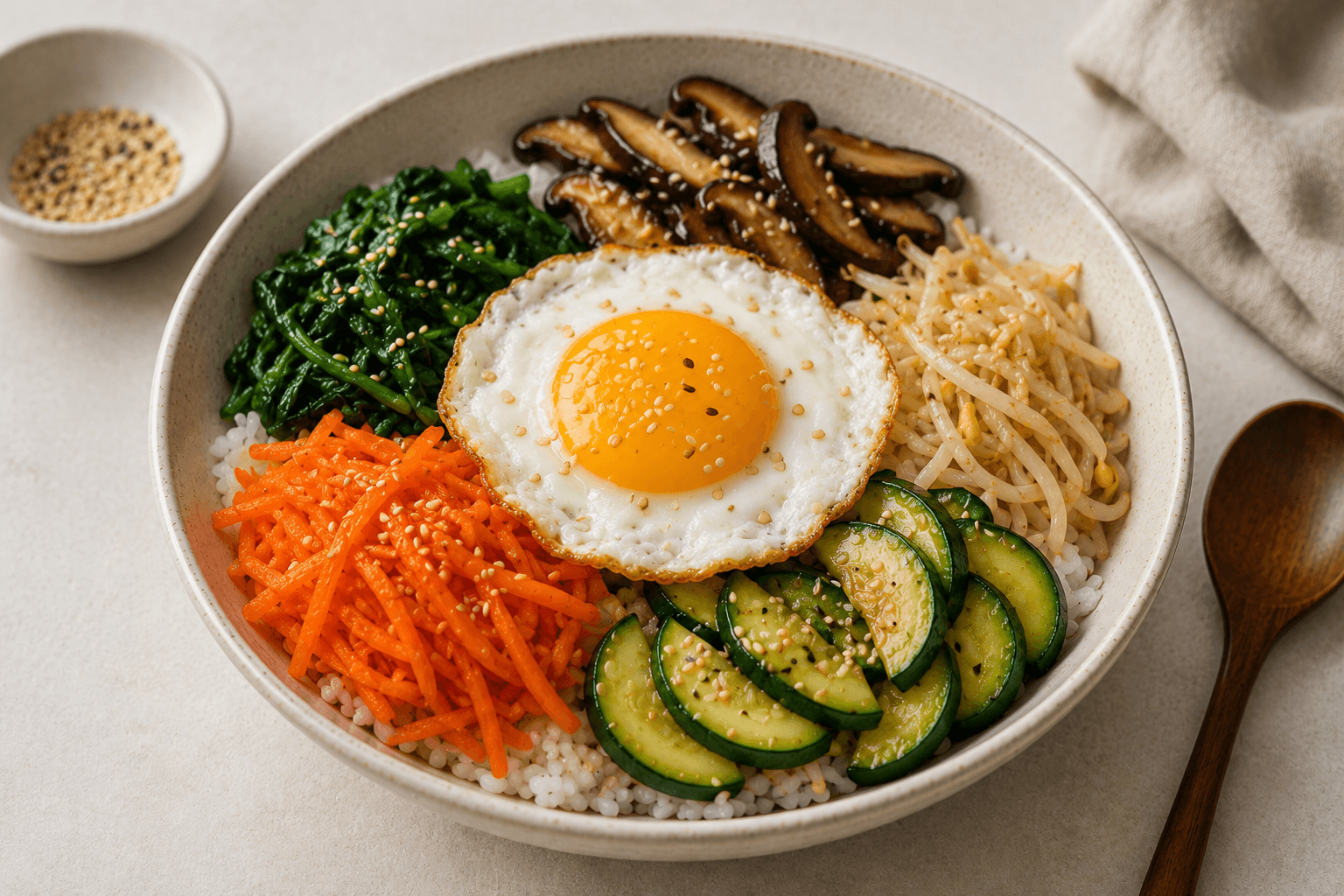
Bibimbap is one of the easiest Korean meals to make from rice, vegetables, an egg, and a good sauce. It does not have to look perfect — the balance of rice, vegetables, and gochujang sauce matters most.
Bibimbap literally means “mixed rice.” It is a Korean rice bowl made by mixing warm rice with seasoned vegetables, gochujang, sesame oil, and often a fried egg.
For me, bibimbap is especially practical when I already have a few Korean side dishes prepared. Spinach namul, danggeun bokkeum, hobak bokkeum, pyogo beoseot bokkeum, kongnamul muchim, sukju namul muchim, musaengchae, and bokkeum gochujang all work beautifully as toppings.
You do not need to prepare every topping at once. Bibimbap is still delicious with only three or four vegetables. For a simple bowl, gochujang and sesame oil are enough. For something more filling, add a fried egg, beef, or bokkeum gochujang.
Carrots, zucchini, spinach, mung bean sprouts, mushrooms, and cucumber are all practical choices. The important part is not that every bowl looks the same, but that the rice, vegetables, sauce, and sesame oil taste balanced when mixed together.
Prepare the rice first. Warm, freshly cooked rice works best for bibimbap.
Prepare the vegetable toppings. Spinach namul, stir-fried carrots, hobak bokkeum, shiitake mushrooms, kongnamul muchim, sukju namul muchim, or musaengchae all work very well. You can use whatever you already have prepared.
If you want to use an egg, fry one egg per bowl. The yolk can stay slightly soft.
Place the warm rice in a large bowl.
Arrange the prepared toppings next to each other on top of the rice. This makes the bowl colorful and lets everyone see the different ingredients.
Add gochujang or bokkeum gochujang. Start with a little less and add more later if needed.
Finish with sesame oil and sesame seeds. If you like, serve it with kimchi or musaengchae.
Before eating, mix everything well. That is what bibimbap is about: rice, vegetables, sauce, and sesame oil mixed together.
Share the link, a short introduction or an image made with the existing recipe photo.
Download the image, then paste the title, description and link into the matching fields of a new Pin.
Review the text and choose a suitable board. If the original photo was made or edited with AI, mark it as AI-modified when publishing.