Quick tips
- Season the warm rice with sesame oil and salt, then let it cool slightly before rolling.
- Do not make the fillings too wet, or the seaweed sheet may tear.
- Lightly wet or oil the knife before slicing.
A practical kimbap recipe with seasoned rice, gim, and simple fillings for Korean rice rolls that hold together beautifully.
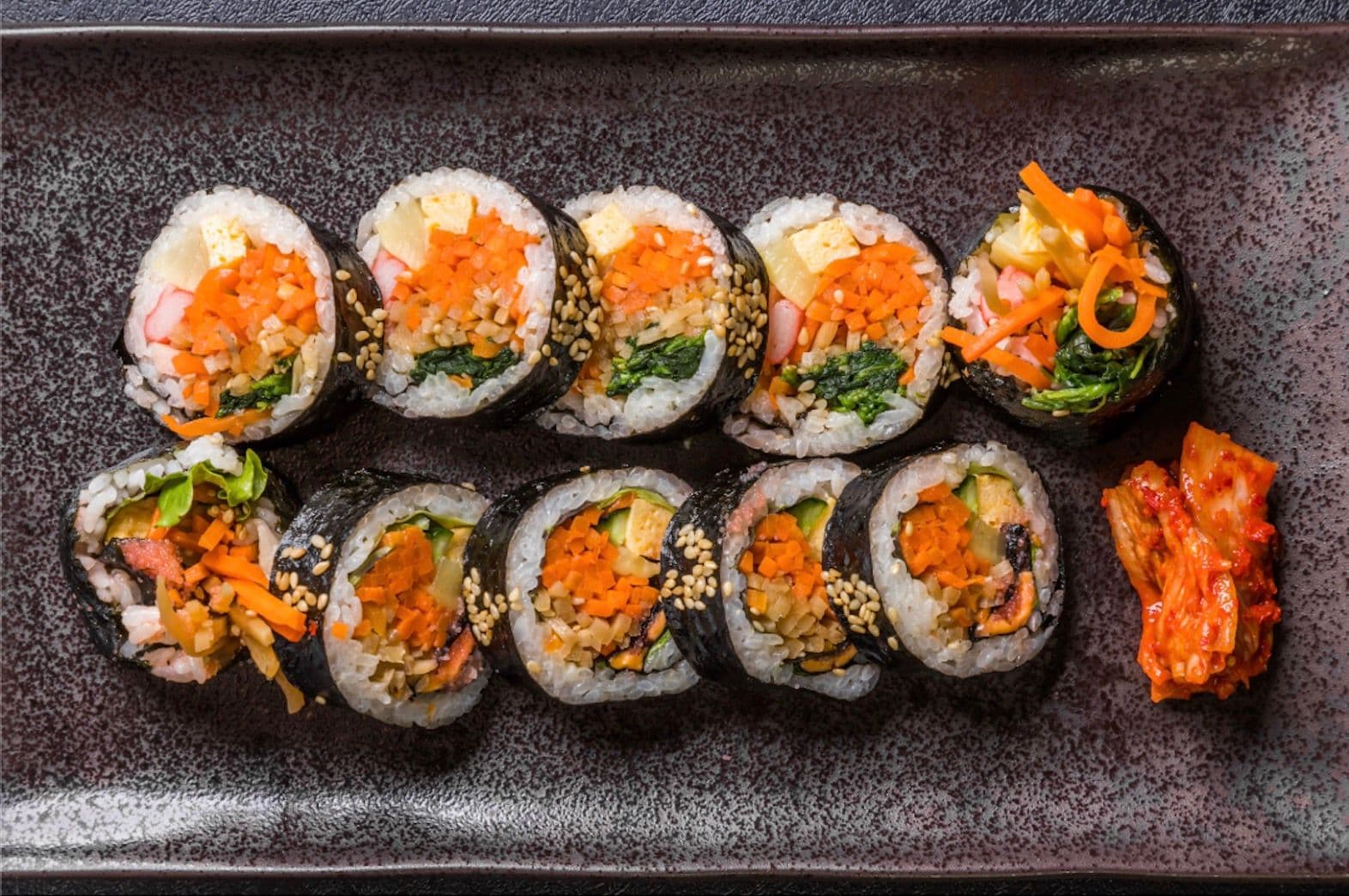
Korean rice rolls
Kimbap looks simple, but the small details matter: well-seasoned rice, fillings that are not too wet, and a firm roll.
Kimbap, also spelled gimbap, is one of the most common Korean rice roll dishes for lunchboxes, picnics, and simple family meals.
Korean kimbap is different from Japanese sushi. Sushi usually uses vinegared rice and often focuses on a small number of carefully prepared toppings. Kimbap uses rice seasoned with sesame oil and salt, spread over gim and rolled with several cooked or seasoned fillings.
Traditional kimbap often includes egg strips, carrots, imitation crab, spinach or cucumber, burdock root, and pickled radish called danmuji. This is often considered basic kimbap, but there are many other combinations. Popular additions include sausage, bulgogi, kimchi, and tuna.
I rarely made kimbap while living in Korea, but after moving abroad, I began making it much more often because authentic kimbap was harder to find. This recipe is my basic version for beginners.
Rice
Wash the rice thoroughly. For a rice cooker, add the rice and an equal amount of water together with 3 pieces of dashima (kelp), 1 tablespoon of sugar, 1 tablespoon of salt, and 1.5 tablespoons of olive oil, then start the white rice setting. If cooking in a pot, use the same ingredients and follow the “How to Cook Rice” guide. Once the rice is cooked, remove the dashima. Add 3 tablespoons of sesame oil and plenty of toasted sesame seeds, then gently mix with a rice paddle.
Cucumber
Cut the cucumber lengthwise into 10 strips and remove the seeds. Sprinkle with 0.5 tablespoon of salt and let it sit for 30–40 minutes. Rinse, then squeeze out as much excess moisture as possible. Lightly sauté the cucumber in a dry pan to remove any remaining moisture.
Egg strips
Beat the eggs well with a pinch of salt. Cook them in a roughly 24 cm frying pan to make relatively thick omelets, using about 2–3 eggs per batch. Let the omelets cool slightly, then cut them into strips about 1–1.5 cm wide.
Carrots
Julienne the carrots into thin strips. Heat a little oil in a pan and sauté the carrots. Season with about 0.5 teaspoon of salt and a little pepper, then cook until softened but still slightly firm. Set aside.
Surimi
Prepare the imitation crab sticks according to their size and thickness. Cut them lengthwise if necessary. Use enough pieces for each roll so the filling runs across the full width of the kimbap.
Danmuji
Prepare the danmuji in long strips. This pickled yellow radish gives kimbap its characteristic crunchy and tangy flavor. Pre-cut danmuji is often available at Asian grocery stores or Korean online shops. If you cannot find it, use homemade pickled radish or leave it out if necessary.
Assemble and roll
Place one sheet of gim on a bamboo mat with the shiny side facing down. Spread a thin, even layer of the seasoned rice over the seaweed. Arrange the egg strips, cucumber, carrots, imitation crab, and danmuji across the rice. Roll the kimbap tightly with the bamboo mat, keeping the filling together as you roll.
Finish and slice
Lightly brush the outside of the finished kimbap roll with sesame oil. Using a sharp knife, cut it into slices about 1–1.5 cm thick. If the knife becomes sticky, wipe the blade between cuts. Serve and enjoy.
Share the link, a short introduction or an image made with the existing recipe photo.
Download the image, then paste the title, description and link into the matching fields of a new Pin.
Review the text and choose a suitable board. If the original photo was made or edited with AI, mark it as AI-modified when publishing.