Quick tips
- Slightly sour kimchi works better for stew than very fresh kimchi.
- Briefly stir-fry the onion, pork or tuna, and kimchi before adding water.
- If you use tofu, add it near the end so it keeps its shape.
An easy Kimchi Jjigae recipe with Jongga kimchi, onion, and either pork or canned tuna. A simple Korean kimchi stew you can cook at home.
Korean stew
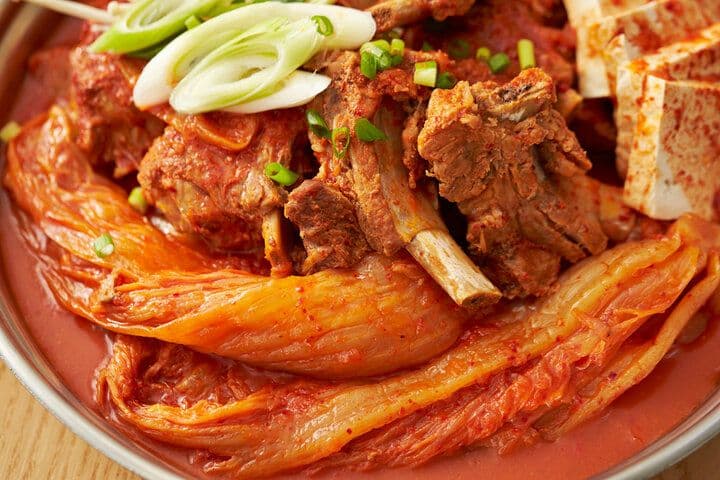
Kimchi Jjigae is one of those warm, honest stews I want to keep in my family recipe archive. It tastes best with slightly sour kimchi and a little time for the broth to become deeper.
Kimchi Jjigae is a simple Korean kimchi stew that tastes best with well-fermented kimchi. This recipe includes two easy versions: a hearty pork kimchi stew and a quick tuna kimchi stew. The base is Jongga pogi kimchi, onion, a little sugar, and rice water or water. It is warm, simple, and perfect with steamed rice.
Slice the onion. Depending on its size, use half an onion to one whole onion.
For the pork version, add a little neutral oil to a pot. Briefly sauté the onion, then cut 200–300 g pork into bite-sized pieces and brown it together with the onion. If using pork belly, you can also sear it in one piece first and slice it afterward.
Add 500 g Jongga Pogi Kimchi and briefly mix it with the onion and pork. Do not fry it for too long; it should just combine well.
Add about 10 g sugar, roughly one Korean spoonful. Stir briefly.
Pour in 800 ml water or, if you have it, rice water. Rice water gives the stew a slightly rounder flavor.
Boil the stew over high heat for about 15 minutes.
Reduce the heat to medium-low and simmer for another 30 minutes, until the flavor becomes deep and well-rounded.
Serve hot with rice. If you use much more than 300 g pork, the dish becomes more like Kimchi Jjim, a braised kimchi dish, rather than a classic stew.
Share the link, a short introduction or an image made with the existing recipe photo.
Download the image, then paste the title, description and link into the matching fields of a new Pin.
Review the text and choose a suitable board. If the original photo was made or edited with AI, mark it as AI-modified when publishing.