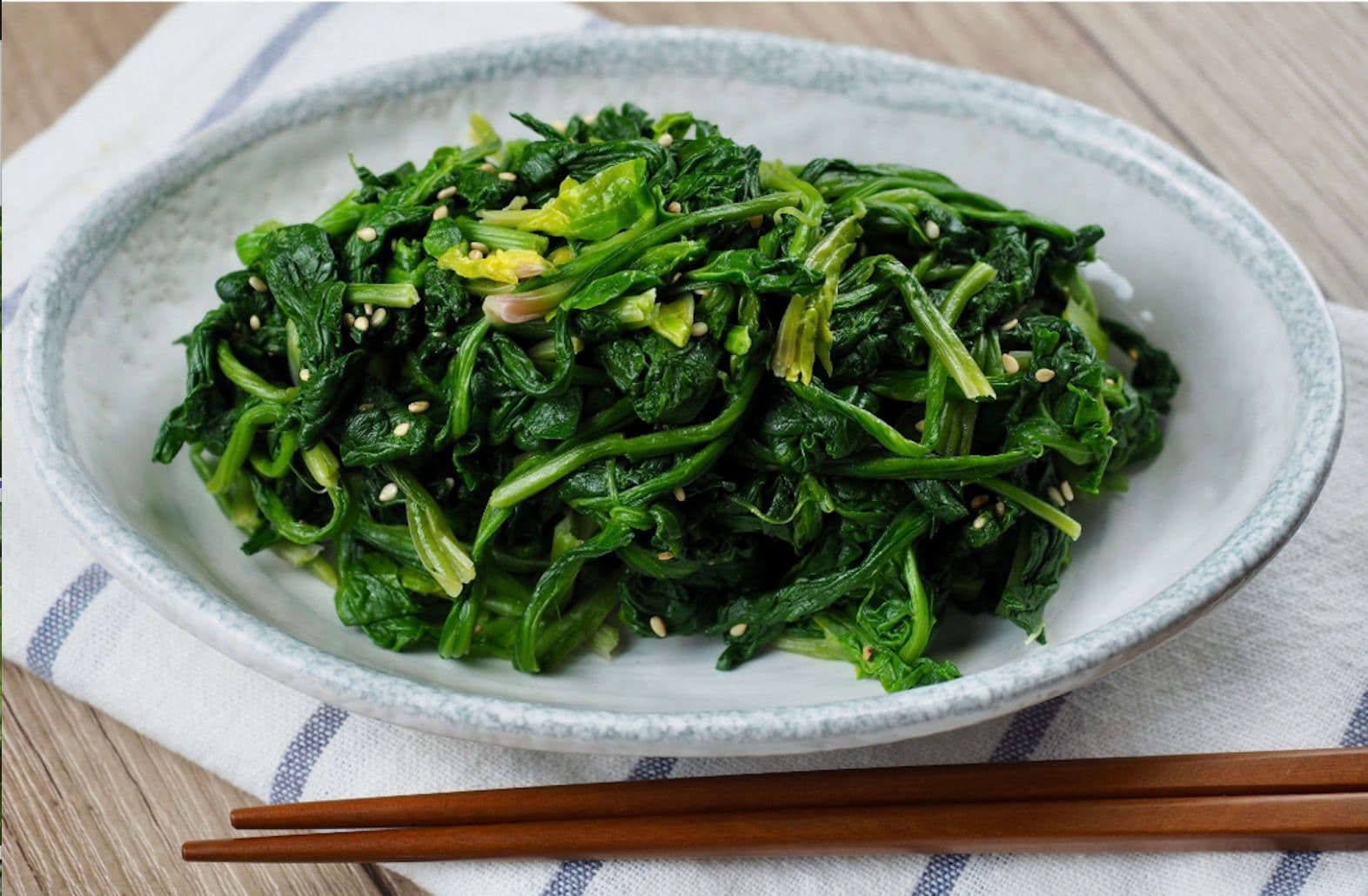
Spinach Namul (Korean Spinach Side Dish, 시금치나물)
A simple spinach namul recipe with spinach, garlic, sesame oil, and sesame seeds. Korean spinach side dish for banchan, kimbap, or bibimbap topping.
My notes for this recipe
Spinach can be sold with the roots attached or as loose baby spinach leaves. Spinach with roots often has a slightly sweeter and richer flavor, while loose leaves are more convenient. Either type works well for spinach namul.
The most important step is to cool the spinach immediately after blanching and gently squeeze out the excess water. If too much water remains, the seasoning becomes diluted and the namul can turn watery.
Spinach namul is a classic Korean side dish served with rice. It also works well inside kimbap or as the green topping for bibimbap. Because cooked spinach spoils fairly quickly, keep it refrigerated and try to eat it within one or two days.
How I cook it
Wash the spinach thoroughly. If you use spinach with roots, clean the root ends especially well because soil often stays there.
Bring about 700 ml of water to a boil in a pot and add 1/2 teaspoon of salt.
Add the spinach to the boiling water. If you use spinach with roots, place the root ends in the water first. Blanch for about 30 seconds.
Transfer the blanched spinach immediately to cold water. Gently squeeze out the excess water, but do not squeeze too hard so the spinach stays a little juicy.
If the leaves are very large, cut them into bite-sized pieces. Small spinach leaves from the supermarket can usually be left whole.
Place the spinach in a bowl and gently loosen the leaves. Add sesame oil, minced garlic, and soup soy sauce or fish sauce.
Mix gently and adjust with a small pinch of salt if needed.
Lightly crush sesame seeds and sprinkle them on top.
What to cook next
Share this recipe
Share the link, a short introduction or an image made with the existing recipe photo.
Prepare a Pinterest Pin
Download the image, then paste the title, description and link into the matching fields of a new Pin.
Review the text and choose a suitable board. If the original photo was made or edited with AI, mark it as AI-modified when publishing.