Yukgaejang (Korean spicy beef soup, 육개장)
A practical yukgaejang recipe with beef, green onions, gochugaru, mushrooms, and glass noodles for a warming Korean soup.
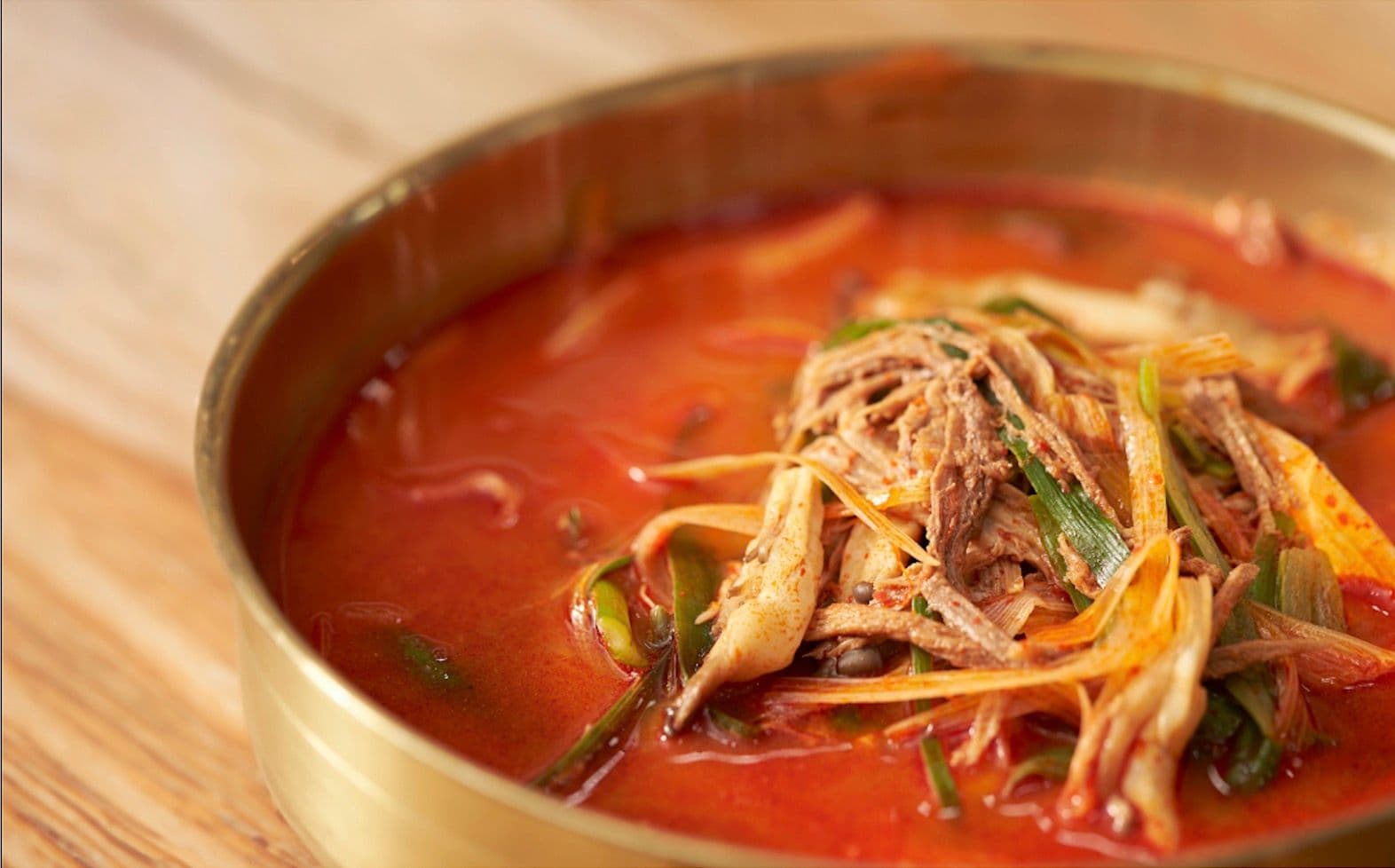
Yukgaejang from my kitchen
I make this spicy Korean beef soup with very thinly sliced beef, green onions, mushrooms and mung bean sprouts. Gochugaru, garlic and two soy sauces season the broth, with eggs and glass noodles added near the end.
Plan ahead: As described in my notes, soak the glass noodles in cold water for about 1 hour, then boil them separately for about 4 minutes. Start soaking before cooking the soup; allow extra time for this beyond the listed 50-minute recipe time.
Ingredient and preparation questions
Which glass noodles do I use?
This recipe uses dangmyeon, Korean glass noodles. I add the separately cooked noodles to the pot just before serving, or put them in a bowl and pour the hot soup over them.
About dangmyeon →Why are there two soy sauces in the list?
I use 1 tbsp each of jin-ganjang and guk-ganjang here. The ingredient guides explain both types. Follow the amounts in this recipe; these names refer to different soy sauces.
What makes the soup spicy?
My ingredient list calls for 3–3.5 tbsp gochugaru. In step 4, I briefly fry this Korean chili powder with garlic before adding the water. Open the ingredient guide if gochugaru is new to you.
About gochugaru →My notes for this recipe
Slice the beef as thinly as possible so it stays tender. I usually use a meat slicer to make the slices thin and even, but a sharp knife also works well if the beef is partially frozen first.
If Korean seasoned salt or Korean sea salt is difficult to find where you live, regular salt is perfectly fine.
Sesame oil is an important ingredient in Korean cooking. If you cook Korean food often, it is worth keeping a bottle at home. You can also find more information about sesame oil in the ingredients section.
For pleasantly chewy glass noodles, soak them in cold water for about 1 hour. Boil them for about 4 minutes, then rinse them under cold water so they do not become too soft.
How I cook it
Slice the beef as thinly as possible. I usually use a meat slicer for this.
Cut the green onions into finger-length pieces. Add 2 tablespoons of olive oil and, if you have it, 1 tablespoon of sesame oil to a preheated pot. In Korean cooking, green onion oil is often used; this step is roughly called “making green onion oil.”
When the green onions turn golden brown, add the beef and sauté it briefly. Once the beef is lightly cooked, add the mung bean sprouts and mushrooms, then stir-fry everything together.
Add gochugaru and garlic, and stir-fry them briefly before adding 1.8 liters of water.
In Korea, ready-made beef bone broth called sagol-gomtang is often added to yukgaejang. If it is not available where you live, use a small amount of beef stock powder instead.
- 20:00
Add soy sauce, soup soy sauce, and salt. Turn the heat to high and let the soup boil for about 20 minutes.
- 2:00
Beat the eggs well and pour them evenly into the pot. Let them sit for about 2 minutes so they set gently and do not break apart too much.
Do you like dangmyeon, Korean glass noodles? Add the cooked dangmyeon right before serving, either directly to the pot or to the serving bowl, then ladle the hot yukgaejang over them.
Season with pepper to taste.
What to cook next
Share this recipe
Share the link, a short introduction or an image made with the existing recipe photo.
Prepare a Pinterest Pin
Download the image, then paste the title, description and link into the matching fields of a new Pin.
Review the text and choose a suitable board. If the original photo was made or edited with AI, mark it as AI-modified when publishing.