Korean Noodles Cooking Guide (국수삶기)
Learn how to boil, rinse, and cool Korean somyeon or jungmyeon so the noodles stay springy for bibim guksu, janchi guksu, and more.
My notes for this recipe
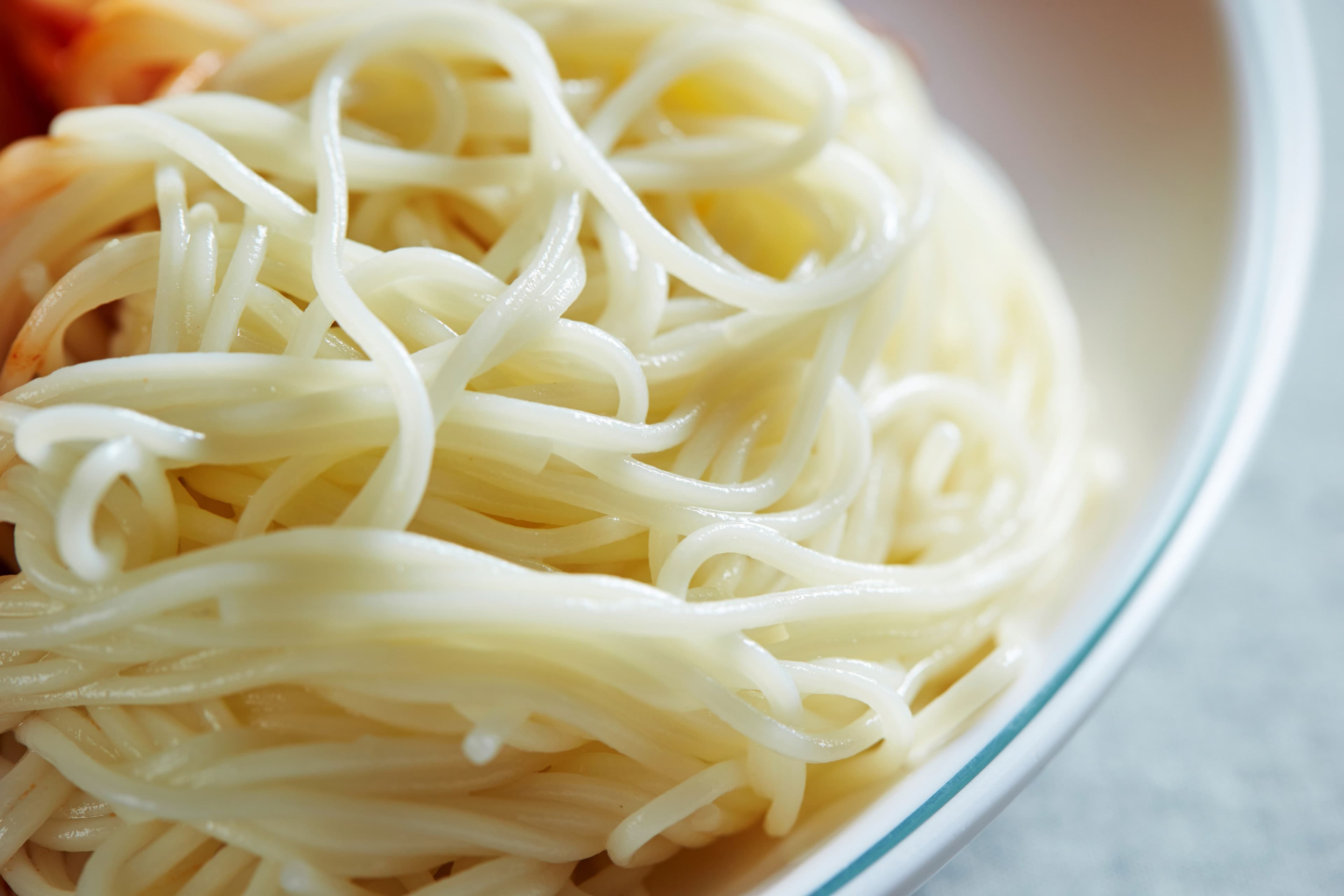
Korean thin noodles (somyeon) or medium noodles (jungmyeon) are staples in many dishes. Once boiled, they can be used for a variety of meals like bibim guksu (spicy mixed noodles), banquet noodles, or stir-fried squid with noodles. Here's a simple guide to cooking them perfectly.
When I cannot easily get to an Asian grocery store, I use very thin supermarket pasta labelled No. 1 on the pack I buy. I boil it in salted water for about 3–5 minutes for that product, then drain it. Pasta numbering and cooking times vary by brand and thickness, so check your own package and taste a strand before draining. This is a practical alternative for Korean-style mixed noodles; the texture is different from somyeon.
How I cook it
Boil Water: Add 1L of water to a pot and bring it to a boil.
For somyeon or jungmyeon, I do not add salt to the water. For a thin pasta substitute, use salted water and follow the package instructions instead.
- 4:00
Cook the Korean noodles: Add the noodles to boiling water.
Somyeon: 3 minutes 30 seconds–4 minutes
Jungmyeon: 4–5 minutes
Tip: Set a timer to avoid overcooking.
When I cannot easily get to an Asian grocery store, I use very thin supermarket pasta labelled No. 1 on the pack I buy. I boil it in salted water for about 3–5 minutes for that product, then drain it. Pasta numbering and cooking times vary by brand and thickness, so check your own package and taste a strand before draining. This is a practical alternative for Korean-style mixed noodles; the texture is different from somyeon.
The numbered steps below are for Korean wheat noodles (somyeon or jungmyeon). If using thin pasta instead, use salted water and follow its package cooking time; the noodle-specific timings below do not apply to pasta.
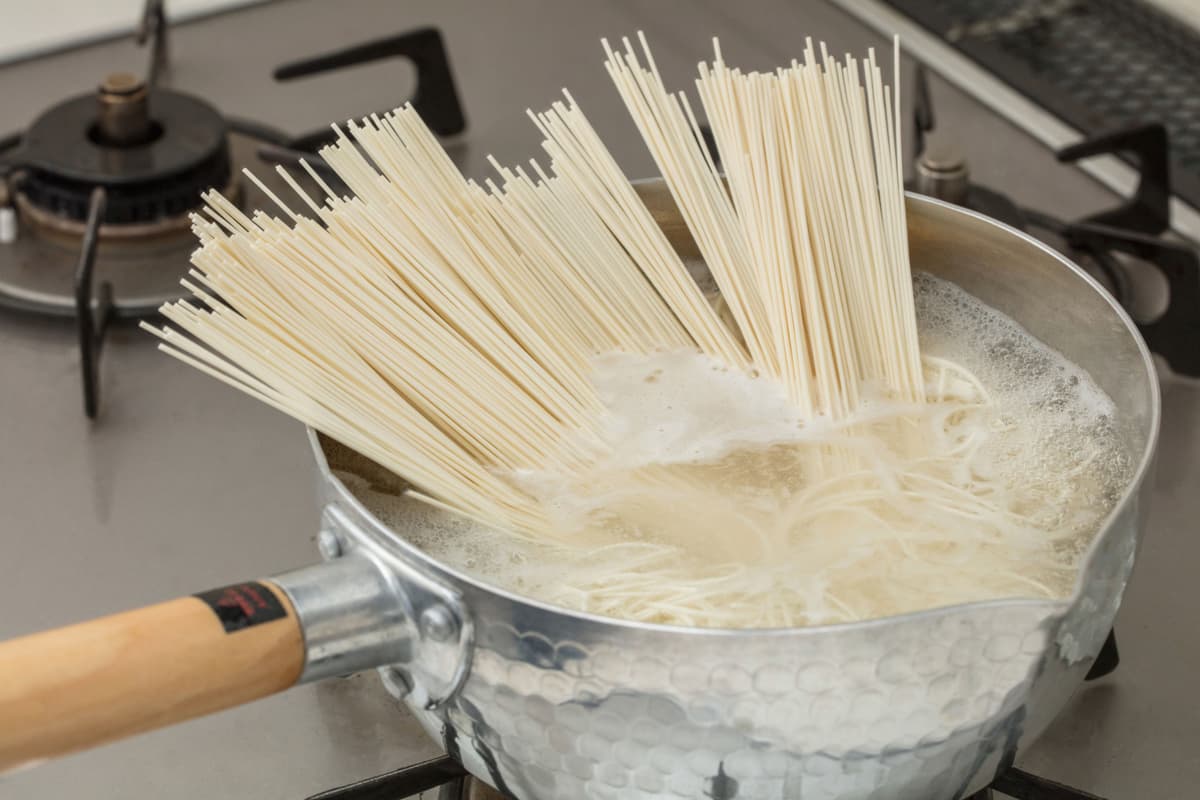
Manage the Foam: As the noodles cook, foam may rise and overflow.
Add about 1/3 cup of water to calm the foam.
This also helps maintain a firm texture in the noodles.
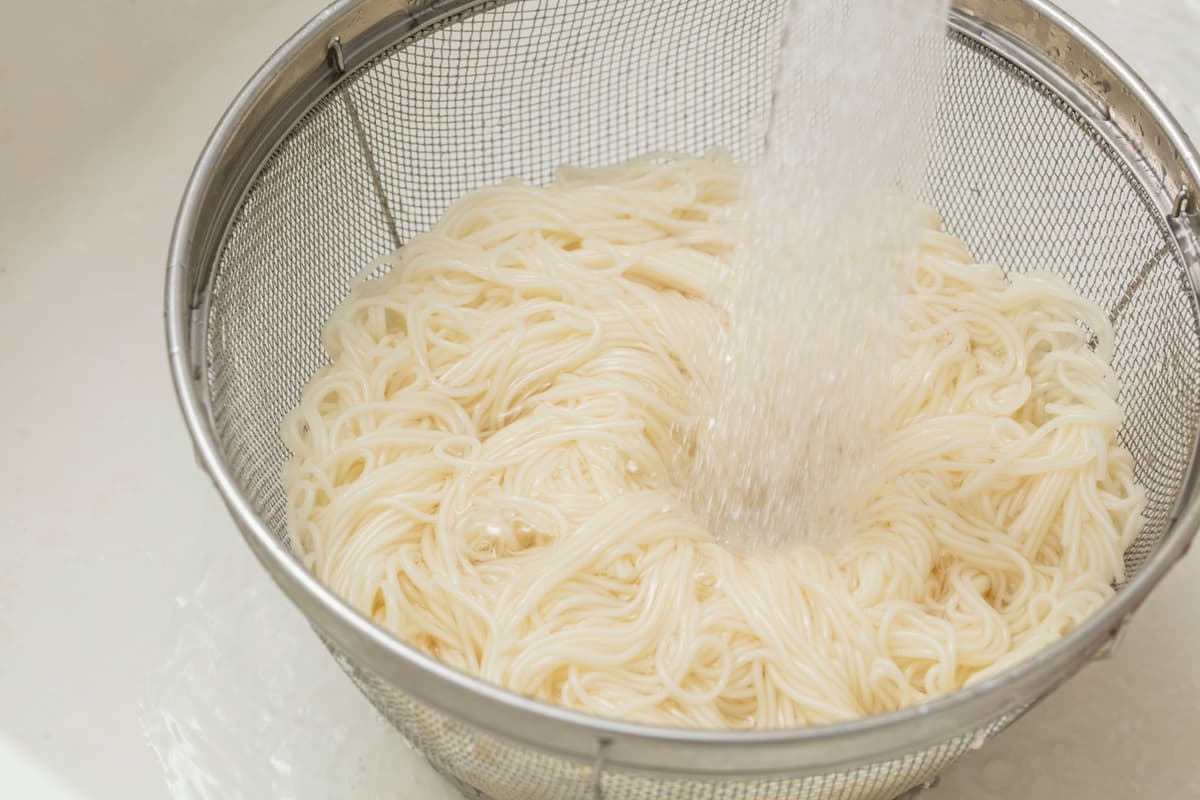
Rinse the Noodles: Drain the cooked noodles and rinse them under cold running water twice.
This removes excess starch and improves texture.
Serve and Enjoy: Use the prepared noodles in various dishes like banquet noodles or stir-fried recipes.
What to cook next


Share this recipe
Share the link, a short introduction or an image made with the existing recipe photo.
Prepare a Pinterest Pin
Download the image, then paste the title, description and link into the matching fields of a new Pin.
Review the text and choose a suitable board. If the original photo was made or edited with AI, mark it as AI-modified when publishing.